
Inside the evolution of streaming audio tracks
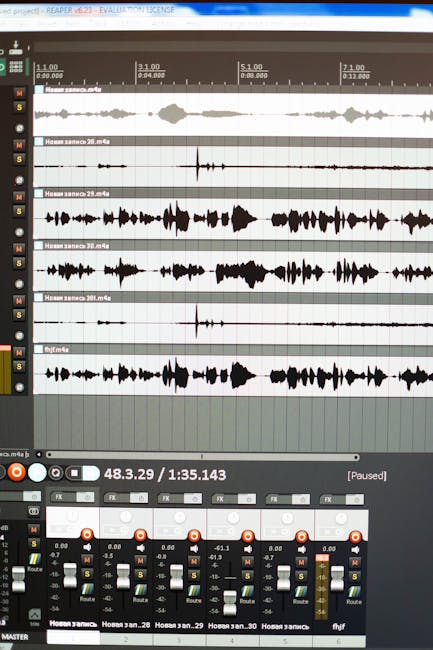
You only have to sit in on a post-production meeting at a mid-tier Berlin audio studio to understand the quiet anxiety that hovers over the streaming world. Too many versions, too many platforms, endless metadata quirks—yet every week, another creative director demands a “Spotify-quality” experience for their app or campaign.
Where It Actually Started: The MP3 Moment
Ask any engineer over about the real beginning and they’ll talk about Napster’s heyday in —the wild west of digital audio. But it was Apple, when iTunes debuted in , that forced the industry into encoding standards: AAC files, bitrates capped at kbps (then ), ID3 tags for metadata. These decisions echo today. Even now, legacy music catalogs landing on Spotify often require painful re-mapping of old tags and file formats.
But this isn’t nostalgia—it’s context for why so much still breaks. In European localization companies like LocLab in Munich, engineers regularly grapple with back-catalogue tracks missing key metadata fields because they were ripped from CDs pre-. The ghosts of Napster-era workflows haunt every new integration.
The Streaming Track Is Never Just One File
A common misconception outside tech teams: one master track fits all. Reality is messier. Netflix’s international expansion forced an entirely new playbook for audio delivery. During its first rollout in Brazil (), Netflix realized local audiences expected dubbed audio and subtitles as seamless toggles—not separate files. This meant engineering flexible multi-track containers (think: .mxf or advanced .mp4) with not just languages but also descriptive audio, directors’ commentaries, even special mixes tailored to mobile speakers.
Every major streamer follows suit now: Disney+ delivers up to eight simultaneous language streams per title in Europe; Prime Video sometimes pushes twelve for marquee releases. In practice? A London-based post house prepping an action film might output dozens of unique track variants to satisfy platform specs from Tokyo to Milan.
Metadata Nightmares and Platform-Specific Oddities
In a typical project at Parisian agency SoundBridge, the real battle isn’t mixing music—it’s wrangling metadata schemas that shift slightly per distributor. Deezer wants track mood tags for algorithmic playlists; Apple Music insists on strict composer credit formatting; meanwhile Amazon Music cares more about genre hierarchies than anyone else does.
Last year, SoundBridge had to halt delivery of a -track indie compilation because three songs triggered automated copyright blocks—caused by ambiguous ISRC codes inherited from a prior aggregator in Croatia. This isn’t rare; misaligned metadata can delay international launches by weeks.
Audio Quality Arms Race—or Illusion?
There’s another tension simmering beneath all this: bitrate wars disguised as innovation. Tidal touts FLAC-based “Master Quality,” while Spotify stays conservative at kbps Ogg Vorbis except for select high-fidelity pilots announced in Sweden and Germany last winter.
But do average listeners care? At Sydney-based game developer PlaySide Studios—a team whose workflow includes daily syncs with both Twitch and Apple Arcade—the practical focus is compatibility and fast CDN delivery rather than lossless purity. Their head of audio recently joked that most feedback comes not from fans but from platform compliance audits.
How AI Voice Synthesis Complicates Everything Further
Enter AI-generated voice tracks—a trend gathering real momentum since late among audiobook publishers and podcasters. Take DeepZen’s pipeline in London: they produce English-language narration using synthetic voices trained on actors’ timbre and style, generating dozens of alternate takes quickly. But when submitting these tracks to Audible or Storytel, each version must be encoded per precise platform requirements—often including non-standard loudness normalization (- LUFS vs – LUFS elsewhere).
In actual production cycles observed at DeepZen, nearly % of total time is spent not on content creation but reformatting and quality control across platforms with subtly different rulesets.
Why Localization Teams Always Seem Exhausted (Hint: It Isn’t Just Languages)
Consider what happens inside small Polish localization houses like Studio Gdańsk when preparing streaming-ready dubs for children’s animation bound for Netflix Central Europe:
- At least five regional dialects must be tracked as separate stems;
- Each episode requires clean background/FX stems so platforms can swap dialogue without remixing;
- And all must pass automated QC checks running up to four hours per half-hour episode.
No wonder these teams quietly dread every new season order—even as streaming budgets rise year-over-year (anecdotal estimates suggest +% annually since ).
Piracy Isn’t Dead—It’s Just Mutated Into Rip-and-Rehost Culture
One last layer nobody likes talking about openly: even as platforms tighten DRM and watermarking protocols (Disney+ uses forensic watermarking on select premieres), shadow networks continue thriving via rapid-rip tools shared across Telegram groups from Bucharest to Buenos Aires. For every official release meticulously mastered in LA or Copenhagen, there are five bootleg versions bouncing between mirrors before sunrise.